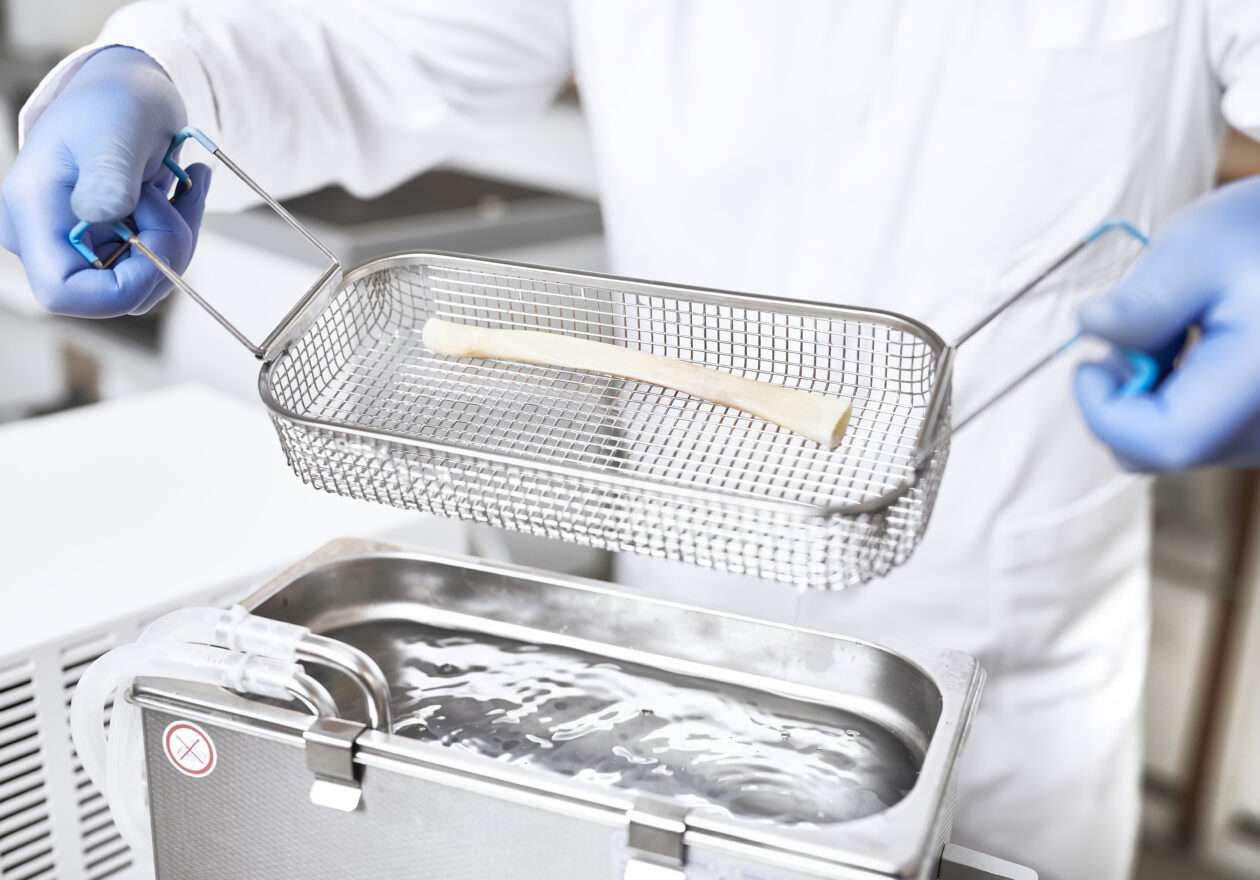
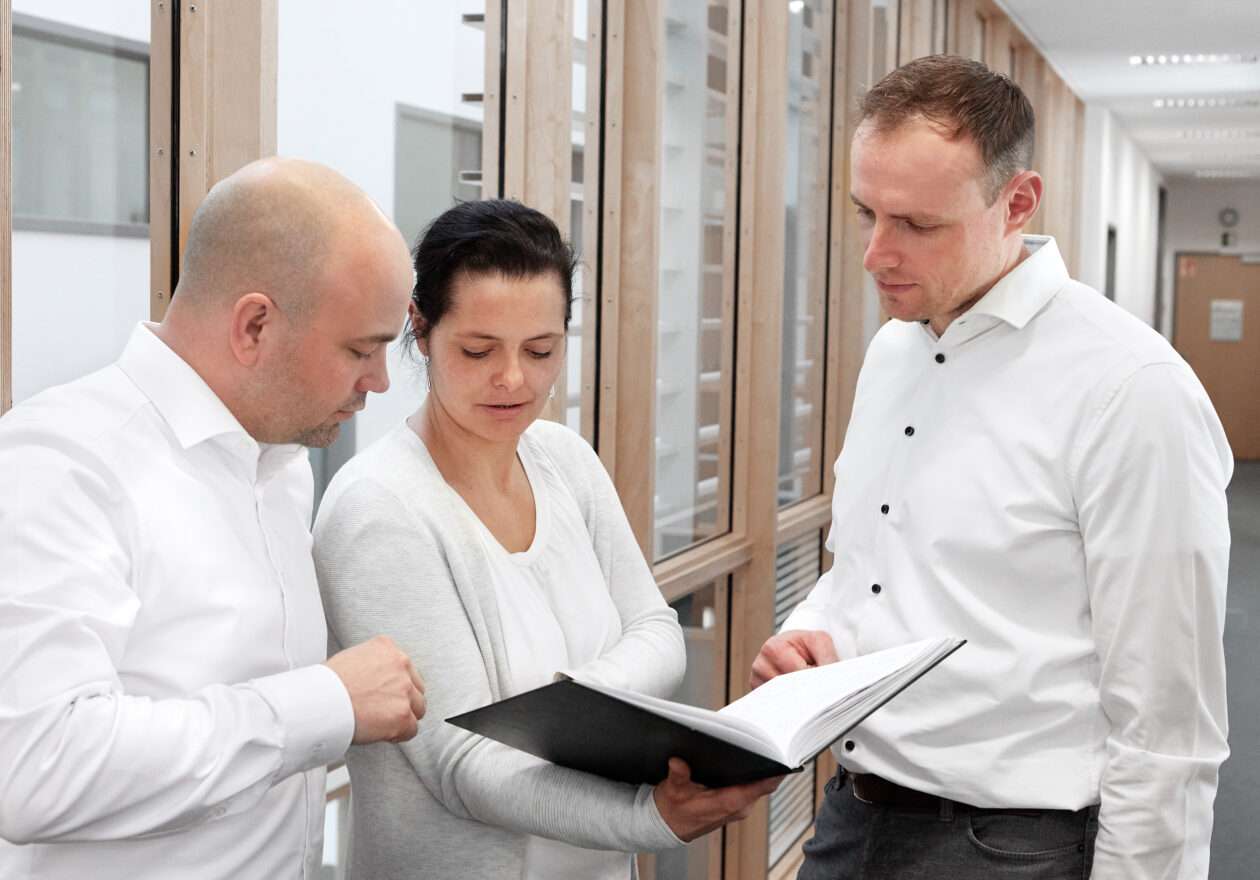
Optimizing transplant properties, adapting them to ever-changing clinical requirements, identifying new surgical applications for existing transplant types, and developing new transplants are what drive the Research & Development (R&D) team.
The goal of our R&D department is to provide surgeons* with the safest possible human transplants to ultimately offer patients improved healing prospects, a more active life, and a higher quality of life. For this, patience and perseverance are well worth the effort.
Developing a new transplant can be a lengthy process. Paying attention to details, shifting perspectives, staying curious, and asking questions are fundamental aspects of research. Those working in this field must possess precision, self-critical thinking, and a high degree of self-motivation while remaining committed to their goal despite setbacks. In the end, the reward is the incredible feeling of being able to help many patients with a new transplant.
The goal is to answer questions about processes and transplants that arise from production or projects as clearly as possible—using our own investigations as well as available information from other sources, such as scientific studies and publications."
Collecting and analyzing data is essential in the R&D field to:
Since 2009, the R&D department has been collecting data on the use of allogeneic, avital hard and soft tissues based on transplantation documentation forms completed by surgeons, which accompany every order. The DIZG allograft registry now contains more than 62,600 verified data records.
Awareness of current publications related to DIZG transplants and applied analytical methods plays a significant role in every aspect of R&D activities.
Scientific information is also crucial for regulatory approval processes for tissue transplants in accordance with the German Medicines Act (AMG). Existing publications must be used to support arguments regarding the safety and efficacy of human tissues. Additionally, the researched studies and publications enable our transplant specialists to provide physicians with the latest information in direct consultations.
For all inquiries regarding shipping, fees, and our transplants, our distribution team is happy to assist you.
Send us an email:
Since its foundation, around 868,000 transplants have been manufactured infection-free.