All About Tissue Donation

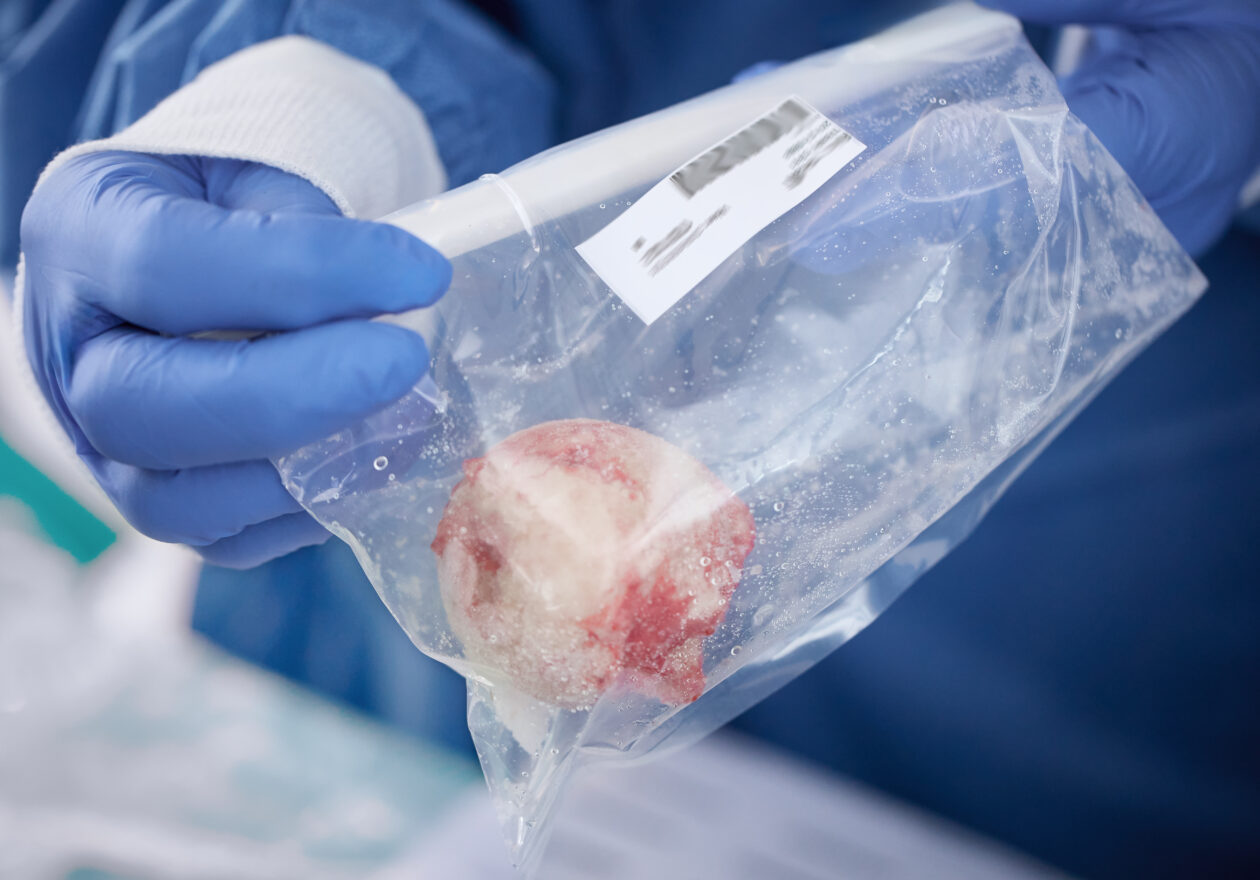
The tissue donations received by the DIZG originate from a living person or are collected post-mortem, i.e. after death. Under sections 3 and 4 of the German Transplantation Act, tissue removal, like organ removal, is only permitted with the consent of the donor or the relatives of the deceased.

Unlike organ donations, tissue donations are not transferred to the recipient(s) immediately after removal, but are first processed into a human transplant in a tissue bank such as that operated by the non-profit organization DIZG.

What is a tissue graft?

A human tissue transplant, also referred to internationally as an allograft, consists of bone or soft tissue taken from a donor and transplanted into a patient. Transplants eliminate the need to remove of the patient’s own tissue, which would otherwise be necessary for treatment and could place additional strain on the patient.

There is a high demand for tissue transplants. They are used in the following medical specialities:

  • Trauma surgery and orthopaedics
  • Sports medicine
  • Maxillofacial surgery
  • Neurosurgery
  • Reconstructive surgery

Tissue transplants are a great way to help the body heal quickly and can significantly improve the recipient’s quality of life.

Tissue donation statistics

How safe are human tissue transplants?

Every potential donor is thoroughly examined and checked for suitability as a tissue donor in order to rule out risks from pathogens such as viruses and bacteria.

The potential donor’s blood is also subjected to approved tests in order to detect pathogens that can cause diseases such as AIDS and hepatitis A, B and C. The screenings carried out for the DIZG actually exceed the requirements specified in EU Directive 17/2006/EC. Any positive result rules the donor out immediately. All tissue remains in quarantine until the results are available. The donated tissue is only processed into a human transplant once it has been approved by authorised medical staff.

In addition, the DIZG carries out a bioburden analysis on the donated tissue after preparation/before sterilisation. This involves counting the total number of microbes capable of multiplying. The tissue is only released for further processing if the number of colony-forming units (CFU) falls below the defined limits.

Only then do the donor tissues undergo a manufacturing process involving mechanical processing followed by sterilization to inactivate possible pathogens. The human transplants are then preserved permanently.


From tissue donation to transplant

1. Arrival of donated tissues and review of documentation
2. Inspection of donated tissues and release for production
3. Preparation of tissue donations
4. Sterilization process
5. Transfer of sterilized tissues in sterile trays
6. Freeze-drying
6. Freeze-drying
7. Assembly and packaging
8. Quality control
8. Quality control
9. Finished grafts in warehouse

General FAQ about tissue donation

Question 1: How can tissues be donated in Germany?

Talk to your doctor about the possibility of donating tissue if you are due to have hip surgery or if you are pregnant and due to give birth. Donation is also possible after death.

If you have decided to donate tissue, you can fill out an organ donor card online and print it out. If you prefer a plastic card, you can apply for one here, for example. You also have the option of registering free of charge in the new central electronic organ donation register of the Federal Institute for Drugs and Medical Devices. You can of course withdraw your consent at any time. You can also record your decision informally in writing.

We would also like to encourage you to inform your relatives or loved ones of your wishes regarding organ and tissue donation. It can be a relief for them if the wishes of the deceased person have been discussed in detail in advance.

Question 2: How is tissue donation regulated at the DIZG?

State of Berlin: LAGeSo Berlin, Regional Council of Saxony

Manufacturing authorization according to sections 13 and 20c AMG (German Medicinal Products Act) (Compliance with GMP/GFP: premises, personnel, hygiene, active and non-active substances)

Nationwide: Paul Ehrlich Institute (PEI)

Marketing authorization according to section 21 AMG, approval of tissue preparations according to § 21a AMG
(medical efficacy, biological safety and suitability of the medicinal product)

Question 3: Are organ donors also tissue donors?

Organ donors can also be tissue donors, but the reverse case is quite rare. The law stipulates that organ donation always takes precedence over tissue removal.

Question 4: What happens to the tissue after donation?

After the tissue has been removed, the donor blood is tested for infectious diseases. The tissue is only processed into a human tissue transplant once it has been cleared. The manufacturing process includes mechanical processing, sterilization, and permanent preservation.

Question 5: Will I be informed who receives my tissue donation?

No, all donations are anonymous. This is required by law. The recipient of a tissue transplant is not told the donor’s name. Neither do the donor’s relatives know who will receive the donated tissue.

Question 6: Why is my blood tested when I donate tissue?

Blood tests are necessary to rule out the presence of pathogens that can cause diseases such as AIDS and hepatitis A, B, and C. If a previously undetected disease is discovered, further diagnostic testing can be initiated. This may benefit living donors.

Question 7: Can I donate tissue if I lived in the UK for a long time in the mid-1990s?

In Germany, people who spent a total of more than six months in Great Britain and/or Northern Ireland between 1980 and 1996 are excluded from donating blood and tissue. The same applies to people who have had surgery or received a blood transfusion there since 1980. This is due to the BSE epidemic in cattle that occurred there between 1985 and 1992. Bovine spongiform encephalopathy, also known as mad cow disease, is fatal, and consuming infected food products can cause the untreatable new variant of Creutzfeldt-Jakob disease (nvCJD) in humans.

Question 8: How does the DIZG ensure that the transplants are free of SARS-CoV-2 viruses?

Safety is always a top priority. All tissue donors at the DIZG are screened for symptoms of infection and/or possible contact with patients infected with Covid-19 on the recommendation of the highest federal authority, the Paul Ehrlich Institute for Vaccines and Biomedical Medicines in Langen (Hesse).

The DIZG’s current donor selection criteria and measures already reliably exclude individuals infected with SARS-CoV-2 and inactivate the virus using the validated peracetic acid inactivation process. As a precautionary measure, donors who have confirmed infections or have had contact with persons with confirmed SARS-CoV-2 infections in the last four weeks are excluded from tissue donation.

FAQs on postmortem and living tissue donation

Question 1: Which tissues can be donated while alive and which postmortem (after death)?

Only amnion (obtained from the placenta at birth) and femoral heads are eligible for living tissue donation. The latter can be recovered during hip surgery, e.g. to treat hip joint osteoarthritis.

In contrast, soft tissue (e.g. tendons, ligaments) and hard tissue (e.g. bones) can only be removed post mortem, since these tissues still perform important functions in the living human body.

Skin can also be recovered post mortem and used to produce grafts, which can then be made available to other people.

Question 2: Are skin grafts considered living tissue donations, and can I donate them to others?

First, it is important to distinguish between allogeneic transplantation (same species, e.g. human to human but different individuals) and autologous transplantation (donor and recipient are the same).

Skin transplants are particularly vital for patients with severe burns. In these situations, skin cells are taken from healthy areas of the patient’s body and multiplied (cultivated) in a complex procedure under the strictest safety conditions. These cell cultures are then transplanted into the patient (autologous transplantation).

Skin can also be recovered post mortem and used to produce grafts, which can then be made available to other people.

Question 3: What are the basic requirements for postmortem tissue donation?

Before postmortem tissue donation can be considered, two criteria must be met: In the case of postmortem donors, death must have been confirmed by two independent physicians and the donor’s consent must be unequivocal (in Germany: organ and tissue donor card/donor registry, information from relatives or close friends, informal written document).

The condition of the tissue is also always decisive. Its suitability for transplantation must be carefully examined on a case-by-case basis.

Unlike organ donations, tissue donations can also be collected after cardiac arrest. As a rule, tissue donation is possible up to 72 hours after the onset of cardiac arrest. For musculoskeletal donations processed by the DIZG, the interval is up to 48 hours.

Question 4: How is the deceased donor treated after tissue removal?

Regardless of whether the donation comes from a living donor or is recovered post mortem, EU Directive 2006/17/EC, Annex IV, No. 1.3.5 stipulates that tissue removal must always be carried out with respect for the dignity of the donor and in accordance with medical standards of care.

In the case of postmortem donation, the donor’s physical condition must be restored with dignity after the tissue removal so that the deceased can be viewed by their relatives (section 6 (2) TPG (German Act on the Donation, Recovery and Transplantation of Organs and Tissue)).

The DIZG provides the removal facilities with high-quality reconstruction materials for this purpose.

Question 5: Where are tissue grafts used?

Bone grafts are used, among other things, to replace bones that have been severely damaged, for example after the removal of tumor tissue or as a result of accidents. They are also used to fill bone defects during the complete replacement of a defective hip joint or to treat diseases of the periodontium.

Donated soft tissue such as tendons, ligaments, and menisci are used, for example, to restore mobility in people with diseases and thus improve their quality of life.

Contact us

Get in touch now

For all inquiries regarding shipping, fees, and our transplants, our distribution team is happy to assist you.

Send us an email:

distribution@dizg.de